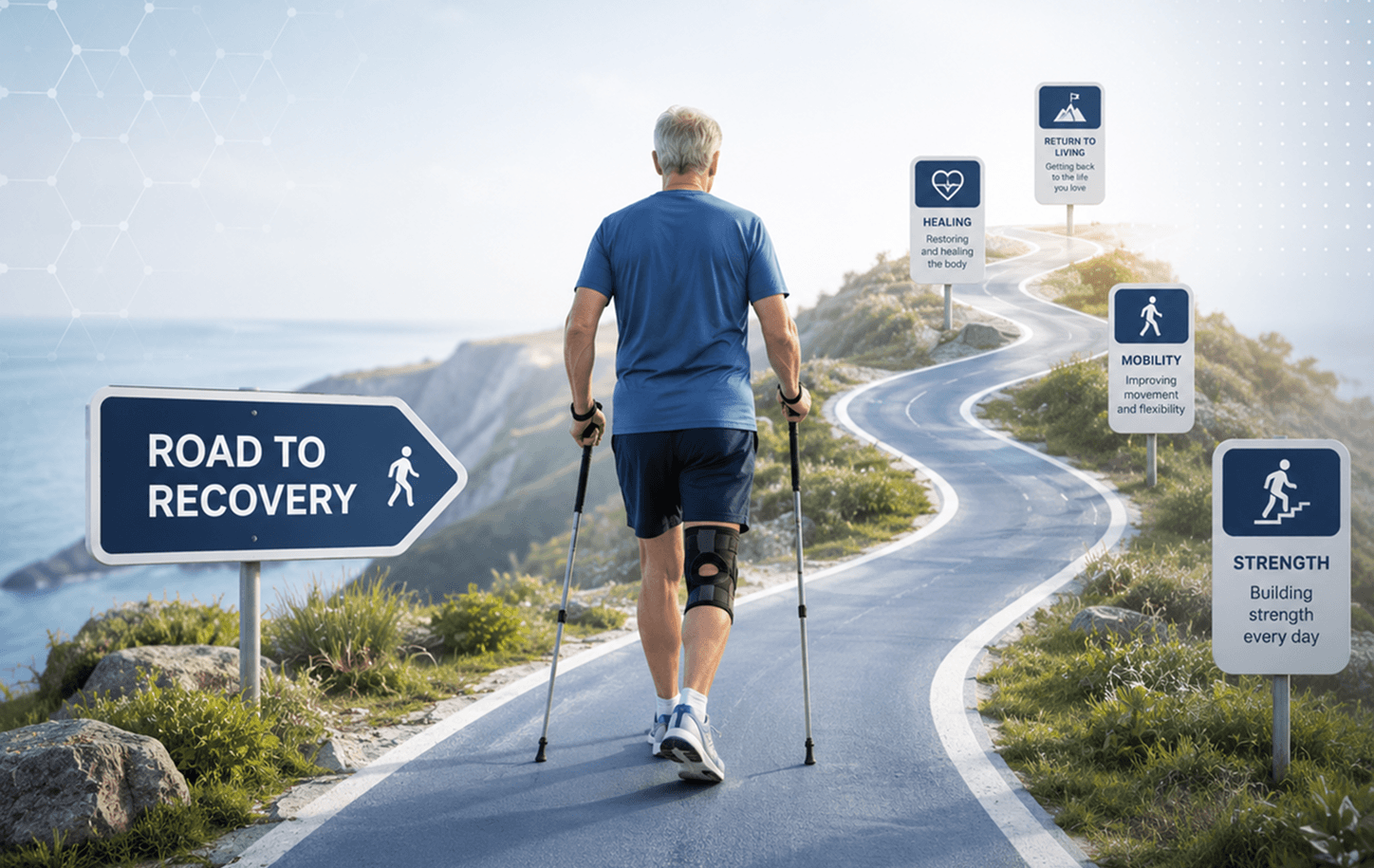



Recovery from knee replacement surgeryknee replacement surgery can be full of challenges along the way. We find that the patients who know what to expect after surgery generally have excellent perspective on their progress and feel less anxious during their recovery period. It is extremely helpful to have a strong support network of family and friends during this time.
Early After Surgery

The first days after surgery are different for every patient. Some have very little pain. For others, this is the most uncomfortable part of the recovery.
Patients are usually up and walking with help within a day of surgery. Some go home the same day, and others stay in the hospital for a few days.
Surgeons now use several types of medicine that reduce pain and swelling in different ways. Because of this, many patients need fewer narcotics than in the past, and some surgeons plan the recovery without them. If you are prescribed a narcotic, try to gradually reduce your use of it as the pain improves. Check with your surgeon before adding anything over the counter, because many prescription pain pills already contain acetaminophencontain acetaminophen.
Narcotic medicines can cause constipation and you may consider using Colace as a daily stool softener, and Dulcolax suppositories as needed to stimulate a bowel movement.
Once you are home, remember to stay ahead of the pain with ice, elevation and rest, and pay close attention to the medicine regimen given by your surgeon.
Learn the warning signs of blood clotsblood clots and infectioninfection before your surgery.
Ice and Elevate
The knee will typically be swollenswollen early after surgery and can be uncomfortable. There is a true balancing act between the need to keep the knee moving versus worsening swelling and pain. For many years, the usual advice was to work on motion and walking aggressively right after surgery. Some surgeons now recommend a slower pace for the first several weeks. If your knee feels good early, it is still important not to overdo it, because too much activity can make the swelling worse.
Remember to ice and elevate the knee during this time. Some surgeons will have their patients use a “cold machine” that can circulate icy water around the knee. The use of ice packs can also provide similar results. We recommend larger packs that can drape over the knee.
Here is how to create your own homemade ice packs. Make four of these packs before surgery and have them stored in the freezer for frequent use:
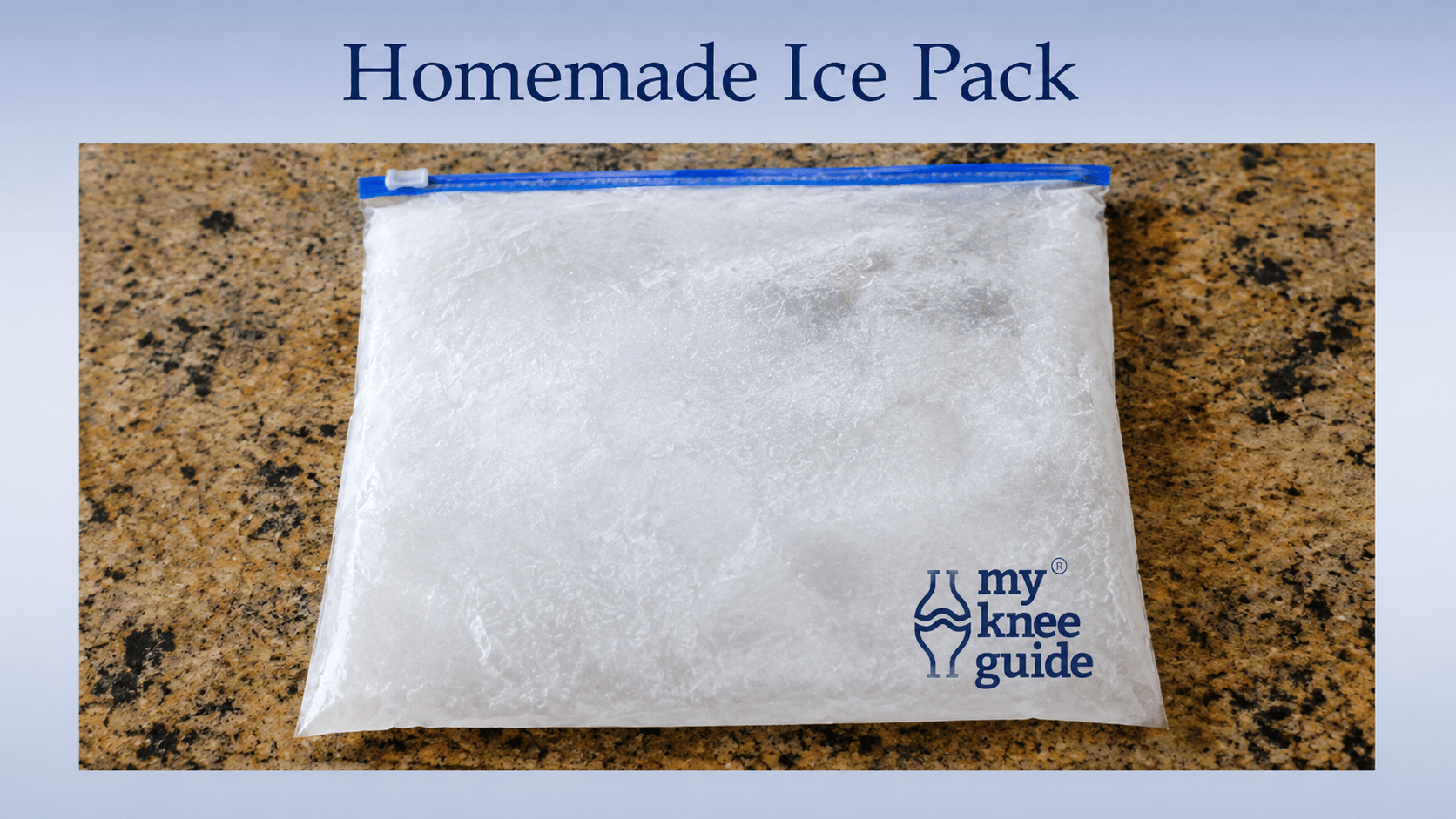
- Use one gallon food storage bags (such as Hefty® or Ziploc®). You may consider double bagging to prevent leaking
- Add 1 cup of rubbing alcohol (70% isopropyl alcohol)
- Add 3 cups of water
- Add a small amount of food coloring if desired
- Evacuate all the air from the bags before freezing
- Place in the freezer. Initial freezing will take 5-6 hours
These ice packs will freeze into a slushy state that can easily be molded around the knee. Remember to place a soft thin cloth between the ice pack and the skin to prevent frostbite. Re-apply the ice packs frequently while the knee is swollen.
Recovery up to six weeks
Initially, it is very common for patients to have trouble getting a restful night's sleep. This is due to the knee being uncomfortable and swollen. A good night's sleep will return over time. Check with your physician if medication is recommended as a sleep aid.
Traveling during the first 3 weeks after surgery should be limited to certain activities such as going to an out-patient physical therapy program. Some patients may opt for home based physical therapyhome based physical therapy in the early recovery period to reduce the need for traveling. Patients may still have difficulty getting in and out of the passenger side of a car at this stage.
By the time you reach the third week, the most significant pain will typically fade. Deep aching becomes more prominent rather than sharp pain. Most patients will start to feel comfortable returning to drivingreturning to driving approximately 2 to 4 weeks after surgery. We recommend avoiding longer trips for up to 6 weeks following surgery, due to the risk of blood clots. Many patients who have "light duty" jobs can return to work about three weeks after surgery.
During this phase, the knee can still feel quite tight at times. Some days will be better than others. During the first 6 weeks, the knee will still need "ice, elevation, rest and exerciseexercise."
It is not unusual for some patients to feel a transient sense of the “blues” or depression during this period of time. This will improve as the knee continues on its recovery process, and as sleep patterns begin to return to normal.
Recovery from 6 to 12 weeks
By six weeks after surgery many patients are now experiencing less pain than they did before surgery and it becomes much easier to visualize the end result. At this time it is common for patients to have noticed that their knee may click or clunk. The noise or sense of instability is caused by some minor motion between the thigh bone prosthesisprosthesis and the plastic component attached to the shin bone. This is usually normal and may become less noticeable as the patient develops better strength in the knee. This increase in strength will help control the position of the components during the normal arc of motion.
Most patients will have finished their formalized therapy by the end of this stage of recovery and will have transitioned to performing an unsupervised exercise program. This period is usually when the results of all your efforts are beginning to be realized. Patients whose jobs involve heavy physical work often return at about eight weeks, and for some it can take up to twelve weeks.
Some patients feel "better than before surgery" as early as one month, but it is common for this to take three months. At 12 weeks after surgery there typically will still be some knee discomfort and minor swelling.
Recovery after 12 weeks
Routine activities become easier over the first three months. You typically will feel much more functional than you have in a long time. After six months, most of the healing has completed. Occasional aching or soreness is still common. For some patients, it may take nine months to a year before the sense of stiffnesssense of stiffness fully resolves. Significant pain from the knee replacementpain from the knee replacement during this period should be evaluated by your orthopaedic surgeon.
References (3)
- Wainwright and colleagues (2020): Consensus statement for perioperative care in total hip replacement and total knee replacement surgery: Enhanced Recovery After Surgery (ERAS) Society recommendations. Acta Orthopaedica 2020;91(1):3-19. A consensus statement covering 17 areas of care around hip and knee replacement. Its best practices include pain control that relies less on opioids and getting patients moving early.
- Hannon and colleagues (2020): Opioids in Total Joint Arthroplasty: The Clinical Practice Guidelines of the American Association of Hip and Knee Surgeons, American Society of Regional Anesthesia and Pain Medicine, American Academy of Orthopaedic Surgeons, Hip Society, and Knee Society. Journal of Arthroplasty 2020;35(10):2709-2714. Guidelines from five professional societies on the use of opioid pain medicine in hip and knee replacement.
- Afzal and colleagues (2026): Quiet Knee Rehabilitation Protocol After Primary Total Knee Arthroplasty Is Associated With Lower Opioid Exposure and No Added Risks: A Retrospective Cohort Study. Journal of Arthroplasty 2026;41(S1):S80-S84. A study from the Hospital for Special Surgery in New York comparing a slower 10-day start to rehabilitation with conventional early therapy in 15,646 knee replacements. Patients on the slower start were prescribed fewer opioids and had similar function at two years. The study was not randomized, and the authors call for a prospective trial.